Before the Counter: The 2026 Update
What's Changed in Prescription Drug Pricing Since the Book Went to Print
Before the Counter closed by naming six changes the evidence supports — value review, a national formulary, a peer-price ceiling, an end to spread pricing, rebates passed to patients, and restored generic competition. In the months since, several of them stopped being proposals.
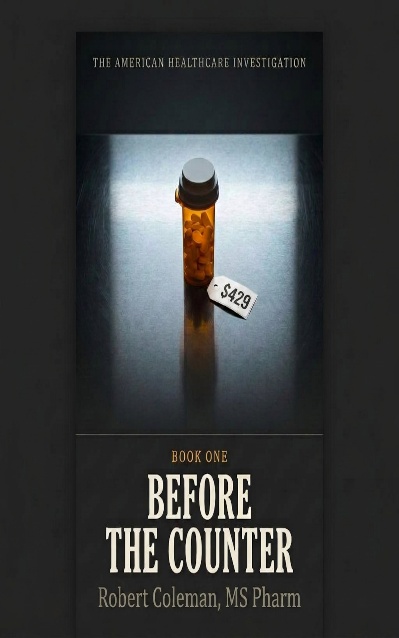
An investigation doesn't end at the printer
Drug pricing policy moved fast in the second half of 2025 and through 2026 — fast enough that five developments deserve documentation here rather than waiting for the next edition.
Two are direct continuations of stories the book already tells: the second round of Medicare's negotiated prices, and a new front — GLP-1 drugs — opening in the same rebate system the book maps chapter by chapter. Three are new: Mark Cuban's Cost Plus Drugs joining the federal TrumpRx platform, a wave of bilateral Most Favored Nation agreements with individual drug makers, and state legislatures moving several of the book's own recommendations into law.
The standard is the same one the book holds itself to. State the claim. Test it against the evidence. Never round a number past what the source reports.
Five Developments
What's changed since the book went to print
01 · May 2026
Cost Plus Drugs reaches federal distribution
TrumpRx — a government price-comparison platform, not a pharmacy itself — expanded to surface generic medications by routing shoppers to three partners: Mark Cuban's Cost Plus Drug Company, Amazon Pharmacy, and GoodRx.
Cost Plus Drugs now carries more than 1,000 high-utilization and high-cost generics. Former U.S. Representative and health-policy analyst Robert Andrews called the expansion “heavy on symbolism but relatively light on real impact” — generics aren't where American drug spending concentrates.
It is, genuinely, the book's own remedy reaching federal shelf space. It has not yet reached the brand-name and specialty drugs the rebate chapter is actually about.
Source: AJMC, “TrumpRx Expands Generic Drug Offerings With Mark Cuban Partnership, Amazon Pharmacy Support”; Mark Cuban Cost Plus Drug Company.
02 · 2025–2026
Most Favored Nation: from one order to sixteen deals
The 2020 Most Favored Nation order — borrowed foreign reference prices, no domestic review body behind them, struck down in court — is where the book leaves this idea. Executive Order 14297 (May 12, 2025) revived it in a different shape: not one blanket order, but individual, voluntary agreements negotiated company by company. Sixteen have been struck so far, including Regeneron, Eli Lilly, and Novo Nordisk.
Testing the claim. The $529 billion figure extrapolates a ten-year savings estimate from agreements that individually run three years. It comes from the administration's own economic team, not an outside body. And the deal terms themselves are confidential, so no independent researcher can currently check what a given patient actually pays against what was promised.
The structural question the book raised about the 2020 order — a borrowed price is not a policy without the machinery behind it — is still the right question to ask of this one.
Sources: Pharmacy Times, “Roundup: Every Most Favored Nation Agreement With the Trump Administration”; STAT News, “Administration report on most favored nation drug pricing raises new details — and questions” (May 6, 2026); White House fact sheet, Regeneron agreement (April 2026).
03 · November 6, 2025
GLP-1 drugs get their own deal
Novo Nordisk and Eli Lilly each reached MFN-linked pricing agreements with the administration, announced the same day.
Direct and government pricing, by drug
| Drug (maker) | TrumpRx / direct price | Medicare/Medicaid pilot |
|---|---|---|
| Ozempic & Wegovy (Novo Nordisk) | $350/month, down from $1,000–$1,350 | $50 copay · ~$245 govt. price |
| Zepbound & Mounjaro (Eli Lilly) | ~$346/month avg., down from $1,080+ | $50 copay · ~$245 govt. price |
| NovoLog & Tresiba insulin (Novo Nordisk) | Capped at $35/month | — |
This is the closest real-world match yet to the VA model the book spends two chapters proving out — a purchaser with actual leverage negotiating a price directly, instead of a PBM negotiating a rebate off an inflated list price. So far it applies to one class of drug.
Source: AJMC, “Trump Announces Deals With Lilly, Novo to Cut Weight Loss Drug Prices.”
04 · Announced November 25, 2025 · Effective January 1, 2027
The second Medicare negotiation round produces results
The book reports the first ten IRA-negotiated Medicare prices, effective January 2026, at discounts of roughly 38 to 80 percent. CMS has now announced negotiated prices for 15 more Part D drugs — among them Ozempic, Rybelsus, Wegovy, and Xifaxan — treating conditions from asthma to cancer to diabetes.
Maximum Fair Price discount, by drug (effective 2027)
| Drug | Discount off non-federal average manufacturer price |
|---|---|
| Janumet & Janumet XR | 85% |
| Tradjenta | 84% |
| Breo Ellipta | 83% |
| Linzess | 75% |
| Trelegy Ellipta | 73% |
| Ozempic, Rybelsus & Wegovy | 71% |
| Otezla & Otezla XR | 65% |
| Xifaxan | 63% |
| Pomalyst | 60% |
| Ibrance | 50% |
| Ofev | 50% |
| Xtandi | 48% |
| Vraylar | 44% |
| Calquence | 40% |
| Austedo & Austedo XR | 38% |
Worth separating from the GLP-1 deals above: this Medicare-negotiated price for Ozempic, Rybelsus, and Wegovy is a different mechanism from the TrumpRx/MFN cash price in Development 03. NPR reported the Part D negotiated price at roughly $274/month — not the ~$245/month government price under the November 2025 GLP-1 deal. Same drugs, two different federal pricing tracks, both real.
Sources: CMS, infographic on negotiated prices for IPAY 2027 (primary); AHA News, “CMS announces latest negotiated prices for 15 drugs to begin in 2027”; AARP, “Medicare 2027 Drug Price Negotiations List Announced”; NPR, “Medicare drug prices: Ozempic and Wegovy.”
05 · 2025–2026
State legislatures pass what the book proposed
Before the Counter's closing chapter names six levers the evidence supports, one of which is ending spread pricing and delinking PBM pay from list price. As of 2026, five states have moved versions of that lever into law.
| State | What changed |
|---|---|
| Arkansas | Act 624 — first law banning PBMs from owning retail pharmacies |
| California | SB 41 — delinks PBM pay from list price, phases out spread pricing (2026), full rebate pass-through, $35/mo. insulin cap |
| Iowa | Rebate pass-through, reimbursement standards, anti-steering, pricing transparency |
| North Carolina | Licensing, transparency, fiduciary duty, acquisition-cost reimbursement floor |
| Texas | Licensure since 2021; 2026 adds contract transparency, bars mid-contract changes |
California's SB 41 is the closest working match yet to the book's own recommendation as written.
Source: AMCP, “5 States Driving PBM Reform in 2026.”
What this does — and doesn't — settle
None of the five developments above resolve the book's central finding: that manufacturer, PBM, insurer, pharmacy, and patient sit inside one interlocking incentive structure, and no single reform touches all of it at once. Cost Plus Drugs and the MFN deals work drug by drug and company by company. State PBM reform works state by state. Medicare's negotiation program works on a fixed annual list, one class of drugs at a time.
What's changed is that the book's proposed remedies are no longer only proposals. Some of them are now running, in specific states, for specific drugs, with results that are sometimes verifiable and sometimes not yet. The investigation continues.
Same pill, same factory, same company — a different price at every counter in America.
Read what a VA pharmacy director found when he followed one prescription backward through the system that sets its price.
Every figure on this page is sourced above. Content current through August 21, 2026.